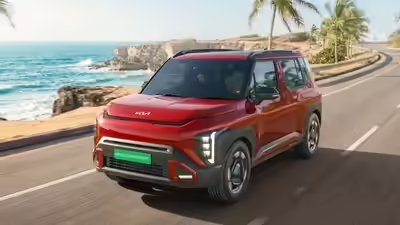









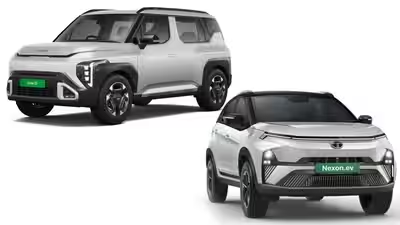
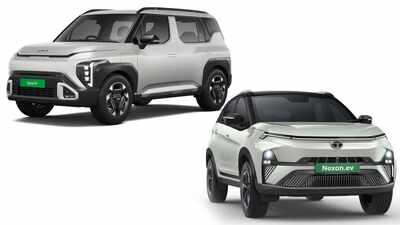
Kia India has officially entered one of the most competitive electric SUV segments in the country with the introduction of the Syros EV. The new model will rival established offerings such as the Tata Nexon EV, which has been among the best-selling electric SUVs in India. While Kia has yet to announce pricing, here’s a closer look at how the two electric SUVs stack up on paper.
Kia Syros EV vs Tata Nexon EV: Battery, range and performance
The Kia Syros EV will be offered with two battery pack options. The entry-level version has a 42 kWh battery with an ARAI-confirmed range of 443 km, while the larger 51.4 kWh battery offers a claimed range of 526 km. According to Kia, this is the first SUV in its segment to exceed the 500 km mark. Power comes from a front-mounted electric motor that produces 171 hp and 255 Nm of torque (with a 51.4 kWh battery), and the larger battery variant can accelerate from 0-100 km/h in 8.1 seconds. The 42 kWh battery variant produces 135 hp and 255 Nm.The Tata Nexon EV is also available with two battery options. The 30 kWh battery offers a claimed MIDC range of 275 km, while the larger 45 kWh battery offers a claimed range of up to 489 km. The smaller battery variant develops 129 hp, while the larger battery variant produces 145 hp. Torque is 215, which is standard for both options.
Kia Syros EV vs Tata Nexon EV: Features
The Syros EV has several premium features, including a 30-inch Trinity Panoramic Display that combines a 12.3-inch digital instrument cluster, a 12.3-inch touchscreen infotainment system and a 5-inch climate control screen. Other features include wireless Android Auto and Apple CarPlay, Kia Connect 2.0 with over 95 connected features, over-the-air updates, 8-speaker Harman Kardon sound system, ventilated front and rear seats, panoramic sunroof, 4-way power driver’s seat, ambient lighting and a 16-liter front camera.Meanwhile, the Tata Nexon EV comes equipped with dual 12.3-inch displays, JBL audio system, ventilated front seats, wireless phone charging, panoramic sunroof with voice assistance, connected car technology, air purifier and vehicle-to-cargo (V2L) and vehicle-to-vehicle (V2V) charging features.