






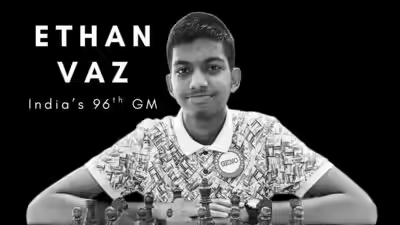
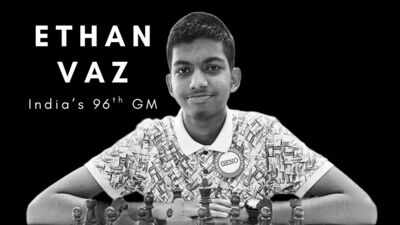
New Delhi: The exact date is March 11, 2011, when a magnitude 9.1 earthquake and subsequent tsunami damaged the Fukushima Daiichi Nuclear Power Plant. Three reactor cores melted, causing the largest release of radioactive material since the Chernobyl nuclear disaster. At the time, Linda Fernandez was pregnant with Ethan Watts.“She was pregnant with Ethan in Tokyo when the crisis happened,” Ethan’s father Edwin Vaz told TOI in an exclusive interview in Sarajevo, the capital of Bosnia and Herzegovina. Edwin and Linda both work as software professionals in Japan. However, after the disaster, their lives are forever changed.“Since she was pregnant, we felt there was a health risk. So I took them to Goa. I went back to Japan to reassess the situation for a few months and finally decided to come back,” Edwin added.Later that year, on September 3, 2011, Ethan was born.On Saturday, while participating in the “Sarajevo Chess Summer – GM Mix” tournament, Ethan achieved his third and final GM standard, becoming India’s 96th Grandmaster (GM) at the age of 14.
The long awaited realization
It took less than 24 hours for Ethan to find a place among India’s chess elite. For Edwin, his son’s monumental achievement remains shrouded in vague messages of celebration.“It actually didn’t sink in because from the moment he came up to par we were frantically trying to answer calls, respond to messages,” Edwin shared. “We still didn’t have time to really get a feel for what was actually going on.”The family knows this last step requires a lot of patience. Once players cross the 2500 Elo mark, finding the Grandmaster Standard becomes an extremely difficult task.“We have been preparing for long-term challenges,” Edwin explained. “People sometimes try for decades for a Grandmaster title and still can’t get it. There’s never a set path or a set timeline. Once you get over 2,500, it’s hard to get a lot of specs. If he plays in a public tournament like this, he’s the top seed… and then he has to play at a lower rating because it’s easier to get specs when you’re at a lower rating.”
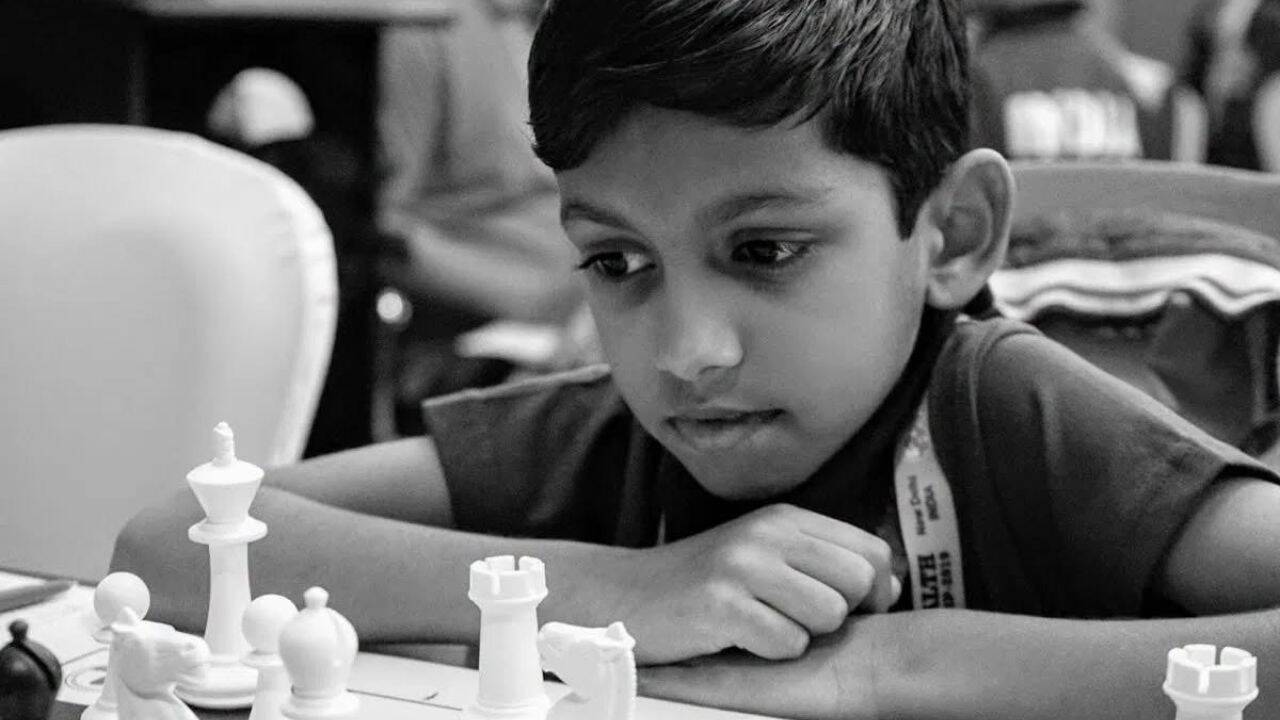
However, Ethan accomplished this milestone with the quiet, unobtrusive manner that is typical of experienced chess players. When a local reporter in Goa asked Ethan for his reaction to becoming India’s latest and the state’s third general manager, the 14-year-old (who currently has a rating of 2522) kept it brief.“I asked him what he wanted to say,” Edwin recalled with a laugh. “He said, ‘This has been my goal since I started playing chess, and I’m happy to have achieved the title of grandmaster.'” When Edwin pressed his son to elaborate, Ethan added: “I will continue to play hard and strive to realize my dream of becoming a world champion.”“Those are his two sentences. That’s it.” Edwin said with a smile. “I think chess players don’t talk much. They play on the chessboard. All the talking happens on the chessboard with their mouths closed.”Ethan, who is currently in tenth standard, was originally scheduled to represent India at the FIDE World Youth Chess Championship in Italy.However, sudden visa delays could derail his plans. Refusing to let their disappointment subside, his parents quickly arranged alternative trips to Serbia and Bosnia and Herzegovina, a switch that paid off hugely as Ethan won the tournament with an unbeaten 7 points from 9 rounds, while also fulfilling his eventual title claim.
When chess replaced comics
Ethan was only six and a half years old at the time. At the time, television screens were a major distraction for children. “Ethan and his brother Edric, who was born in Japan… they were obsessed with cartoons,” Edwin recalled. “We thought maybe it would be better to have them do some intellectual activity rather than being in front of the TV.”They enrolled the brothers in a chess academy near their home in South Goa, where coach Prakash Vikram Singh taught.“We had no idea at the time that chess was actually a sport that could take you in this direction. We didn’t know there was a tournament; we didn’t know there was a competition. We didn’t know you could just play country, state and stuff like that,” Edwin added.Just three months into training, the academy management suggested Ethan to participate in the under-7 tournament in North Goa. Edwin was very reluctant to sacrifice three days of work and study for a new hobby.
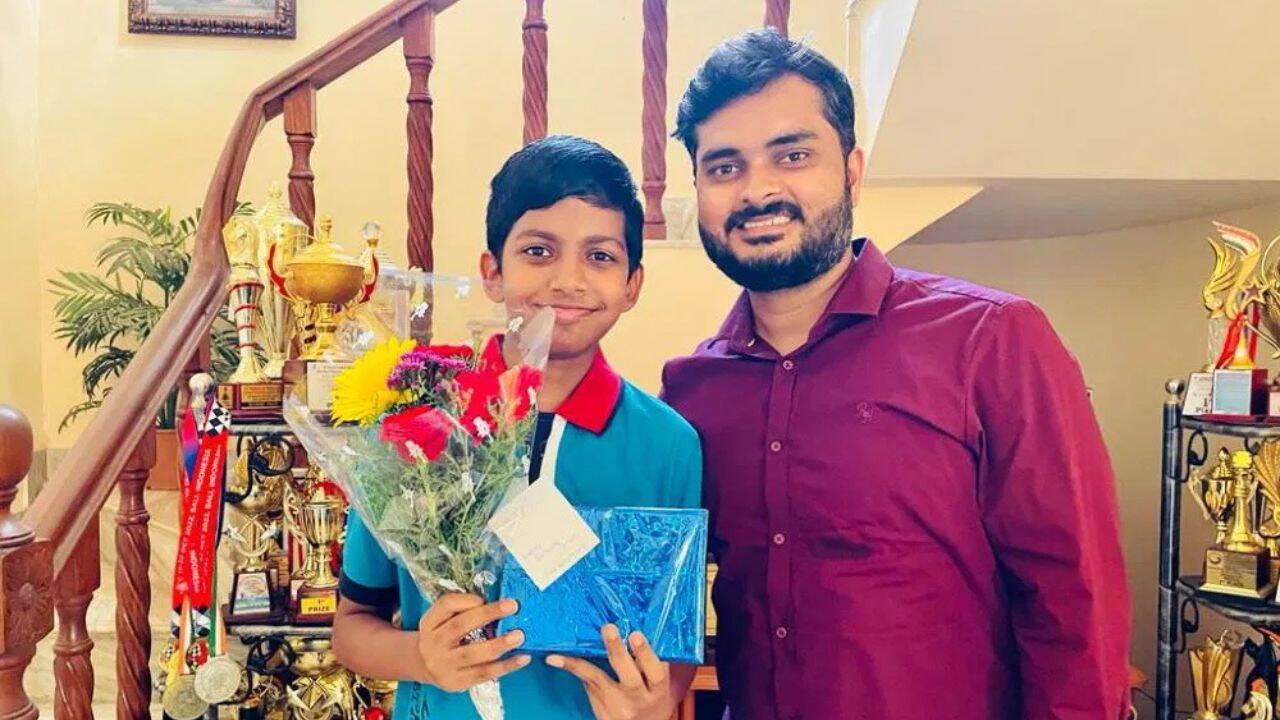
“I wasn’t ready to give three days because we never had the will,” Edwin admitted.But they went. Ethan placed fifth, narrowly missing out on the automatic top two spot at the national championships.At the suggestion of his coach, the family sponsored a donor to compete, giving him exposure in national competitions. Ishaan has so far trained under Singh, GM Swayams Mishra, GM Srinath Narayanan and benefited from various training programs, including one conducted by GM RB Ramesh, where he surprised everyone by making it to the top 20.“That was the first time we realized he had potential,” Edwin said. “From being unwilling to commit three days to a tournament in Goa, to finally putting everything aside, including our startup, to finally let his chess career take off in full swing. It’s been an unexpected journey, but still sweet and meaningful.”
The price of dreams
The pursuit of excellence in chess soon changed the family’s lifestyle. Edwin and Linda moved back to Goa and set up a self-financed IT services company. However, as Ethan’s career accelerates, their professional ambitions must be balanced with the demands of global travel.The financial burden of a professional chess career also creates ongoing anxiety.
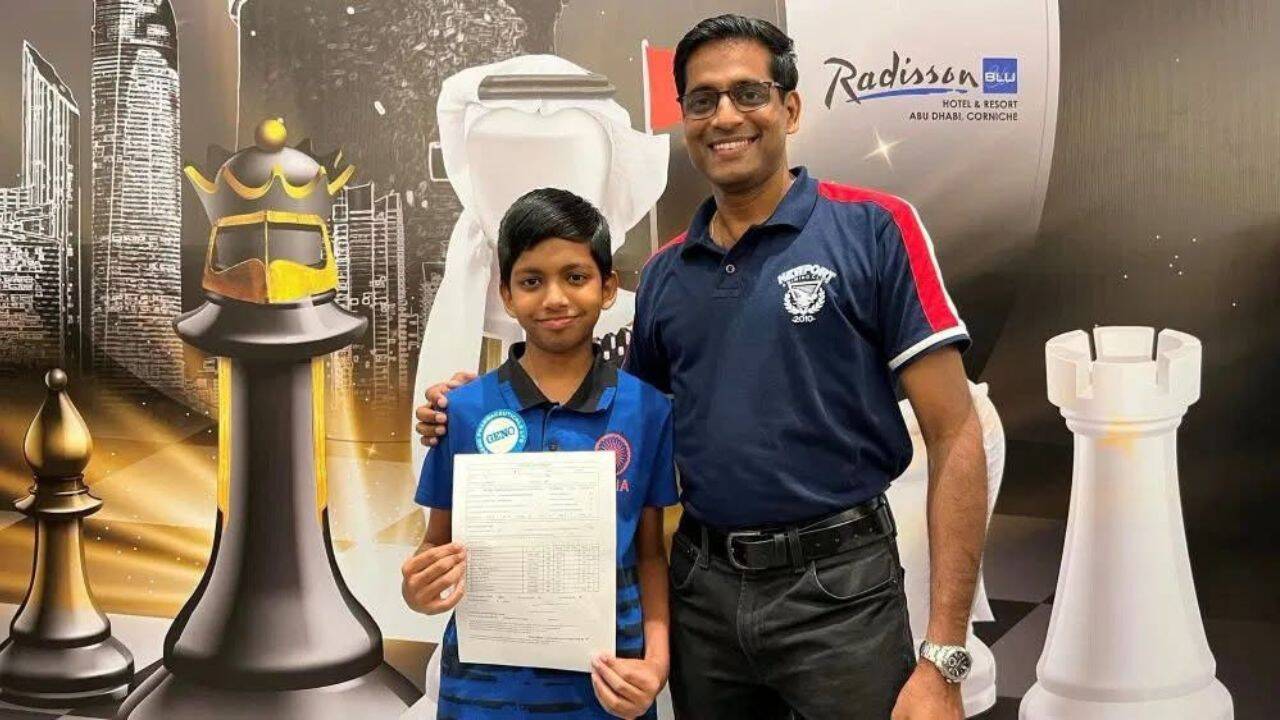
“We were always worried about finances,” Edwin admits. “We kept quite a lot of information, of course because of our retirement funds and backup plans in case our adventure from Japan didn’t pan out. When we realized we were going to spend all our savings on Ethan and his career, we were a little concerned about what the future would bring. ““Chess is like all expenses and no income,” he added. “Even if you win a tournament, you actually spend more to compete than the actual prize money.”Fortunately, recent support from Indian donors and sponsors has made the path seem manageable, helping the family move toward financial stability.
Beyond the system
Making a distinction between grassroots infrastructure and elite professional development, Edwin thanked the Goa Chess Federation and the All India Chess Federation (AICF) for providing the initial competitive platform.“The chess infrastructure is there because the AICF is there and then the state federations are there,” Edwin noted. “The state association holds these competitions to give us exposure. Ethan has won thirty international medals for the country, all thanks to the state association, AICF and Sports Authority of Goa. This infrastructure is very important, especially in the early years.““But in the professional circuit, players aspire to become professional players, which is more of a personal struggle,” Edwin clarified.The journey to becoming one of the world’s elite grandmasters is still long. But Dad had no doubts about the path ahead, as he said, “I think we’re still going to be on that career path because that’s his passion.”