








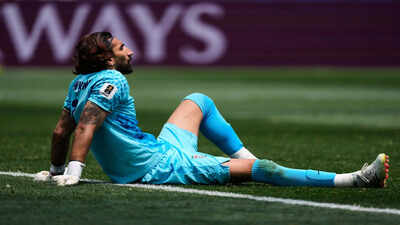
The Iran stopper frustrated Belgium in their 0-0 draw in Los Angeles, but the stories behind his performance range from poverty in rural Lorestan to Guinness World Records and football’s biggest stages.Alireza Beiranvand spent 90 minutes frustrating Belgium at the FIFA World Cup. However, long before he negated some of Europe’s most accomplished attackers on the global stage, he was sleeping on the streets of Tehran, working odd jobs to buy food and chasing a football dream that many around him thought was impossible.In the 0-0 draw with Belgium in Los Angeles, the Iran goalkeeper produced one of the best individual performances of the World Cup so far, making 7 saves to win the man of the match honor and maintaining this result, putting the Melli team firmly in contention for a knockout spot.Beiranvand’s performance would have been impressive under any circumstances, but the story behind how he arrived on football’s biggest stage makes the achievement even more extraordinary.
Seven saves against Belgium keep Iran’s World Cup hopes alive
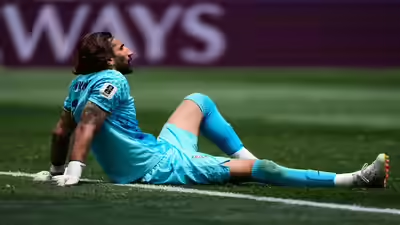
Belgium came to the SoFi Stadium under pressure after drawing 1-1 with Egypt in the opening game. Iran also drew 2-2 with New Zealand in its first match, and both teams need positive results to consolidate their status in Group G.The game quickly became a test of Beiranvand’s concentration, adaptability and ability to save.Belgium dominated possession from the opening whistle and finished with 68% possession compared to Iran’s 32%. They completed 506 passes and 22 shots, forcing the 6-foot-4 Iran goalkeeper to repeat action throughout the afternoon.Beiranvand’s day took an almost catastrophic turn just three minutes later when he had an unexpected but serious collision with Romelu Lukaku, resulting in a knee to the chest and neck. The goalkeeper remained on the field for several minutes while medical staff attended to him, prompting early fears that his afternoon might be over before it even began.
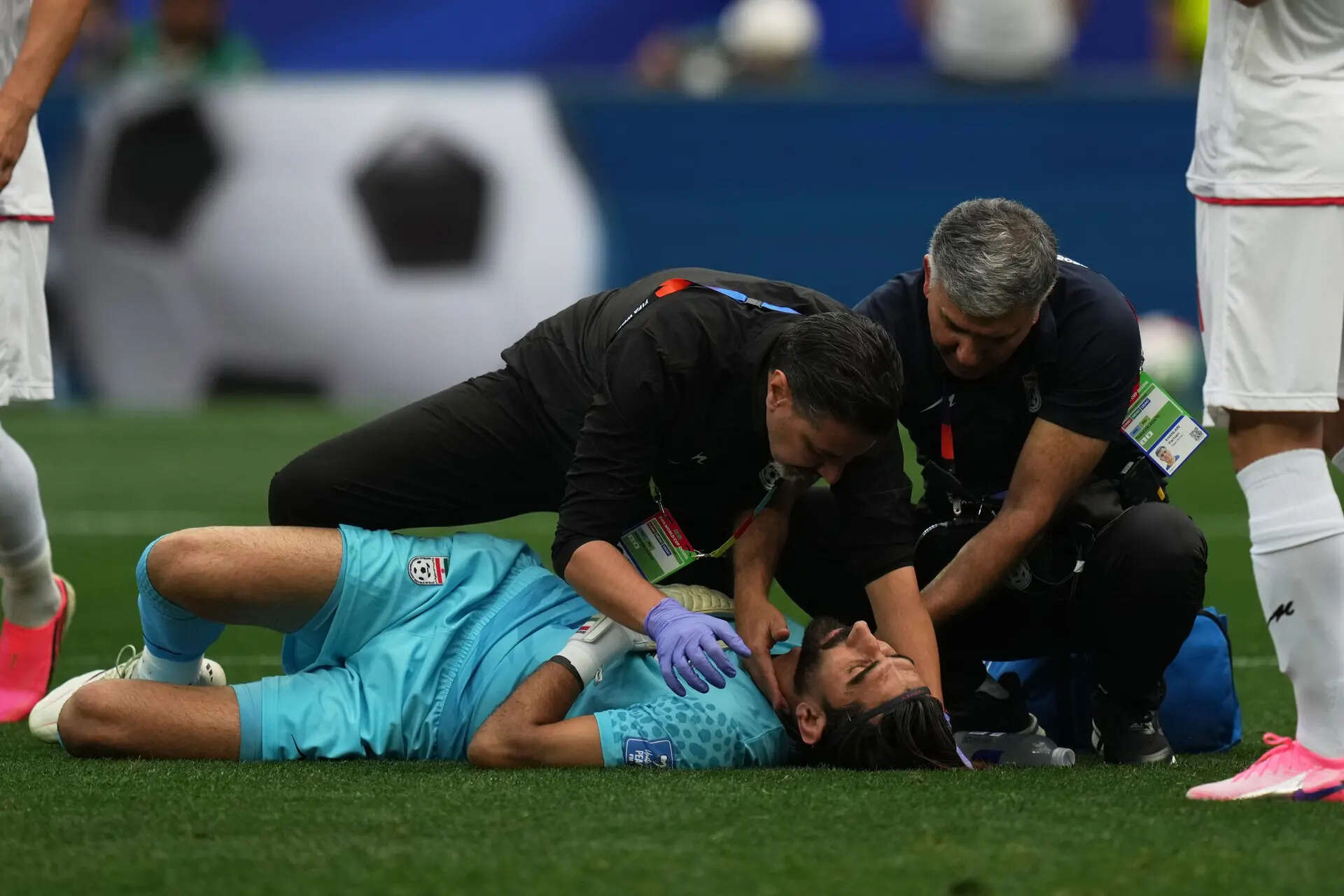
Iran goalkeeper Alireza Beiranvand is treated by a medical assistant during the World Cup Group G soccer match between Belgium and Iran on Sunday, June 21, 2026, in Inglewood, California, near Los Angeles. (AP Photo/Andre Penner)
Instead, he recovered, regrouped, and began to put in one of the best performances of his international career.Belgium found space multiple times but rarely found a way past him. The best moment came when Maxime de Couper looked certain to score from close range, but Beiranvand reacted brilliantly and produced a close-range save that immediately sparked talk of the best goal of the tournament.
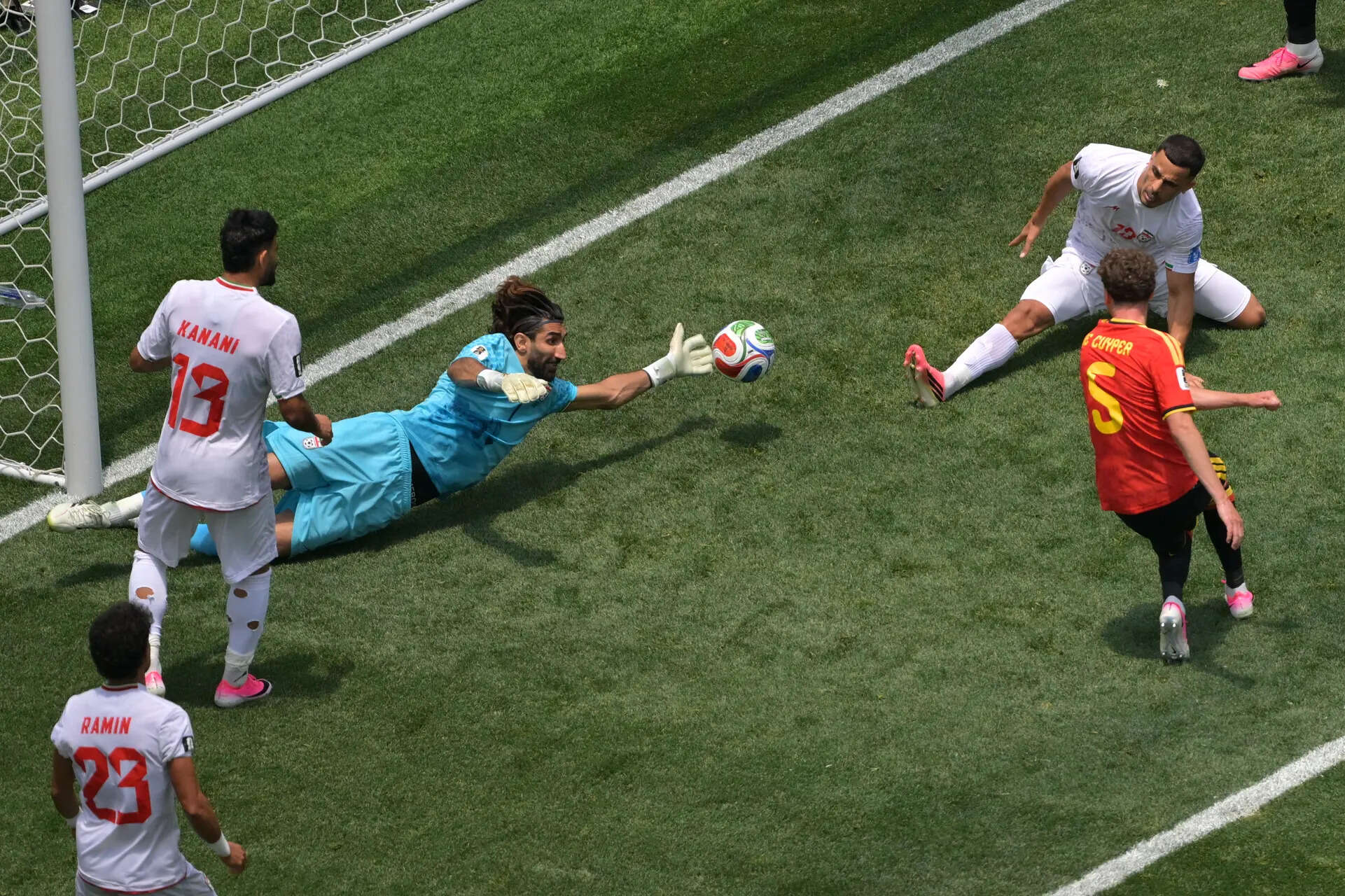
Iran goalkeeper Alireza Beiranvand (1) makes a save during the World Cup Group G football match between Belgium and Iran on Sunday, June 21, 2026, in Inglewood, California, near Los Angeles. (AP Photo/Jayne Kamin-Oncea)
He had made seven saves so far in the match, including four particularly important interventions, to keep a clean sheet against a side ranked ninth by FIFA and help Iran gain a valuable point.Iran head coach Amir Gallenoui was full of praise after the game.“He had one of his best days today,” Gallenoy said through FIFA’s translation service. “He was focused and gave us a very valuable point.”The result left Iran with two points from two games, ensuring advancement to the final group stage match.
Poverty and sacrifice shaped childhood
The journey that brought Beiranvand to this stage bears little resemblance to the journeys of most modern elite footballers.Born into a nomadic Kurdrak family in Iran’s Lorestan province, Beiranvand grew up in a difficult environment where football was seen as an unnecessary luxury rather than a viable career path.His father was strongly opposed to his ambitions, and the family lacked the financial resources available to many young athletes. Equipment, travel and coaching opportunities are hard to come by, while football itself is often considered secondary to more pressing concerns.
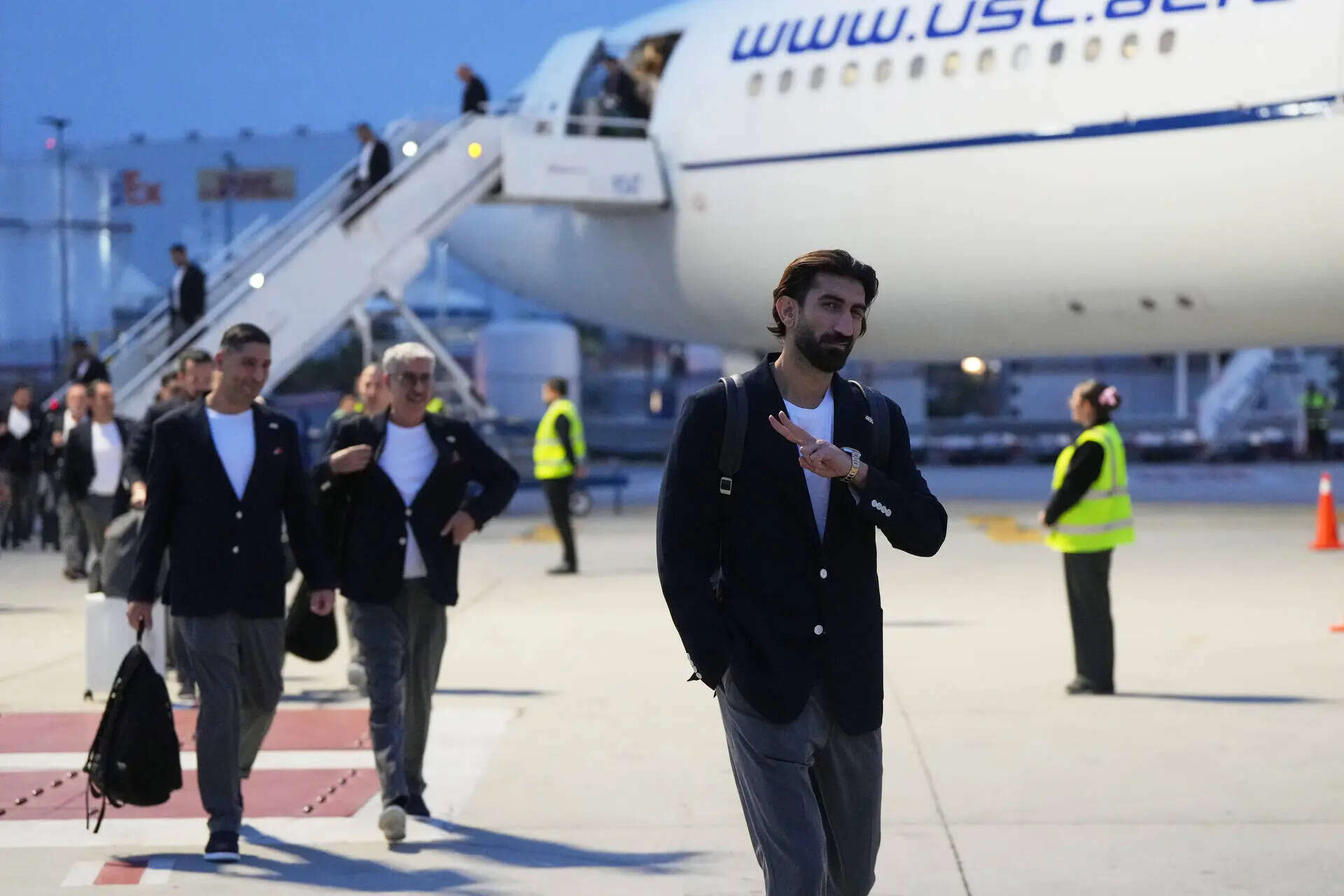
Iran goalkeeper Alireza Beiranvand arrives with teammates for the FIFA World Cup in Tijuana, Mexico, Sunday, June 7, 2026. (AP Photo/Gregory Bull)
As a teenager, Beiranvand made a decision that changed the course of his life.He borrowed money, left home and boarded a bus to Tehran to pursue a football career.Arriving in the Iranian capital does not immediately solve the problem. He had no permanent home, no established support network and few guarantees for his future. He reportedly slept outside the football club for long periods of time in the hope that proximity to the training ground would eventually create an opportunity.To survive, he took any job he could find. He swept streets, cleaned tires at a car wash, worked in a garment factory and prepared dough at a pizza place during late-night shifts. Each small job helped him continue to pursue a career that was still uncertain.Those tough years fostered the resilience that would come to define his goalkeeping career.
The unusual path to two Guinness World Records
Beiranvand’s childhood also produced one of the most unusual athletic skills in world football.He grew up in a rural area and often participated in a local tradition called Dalparan, which involves throwing heavy stones over long distances while tending livestock.The repetitive movements built extraordinary upper body strength, ultimately giving him a physical weapon rarely seen in modern football.
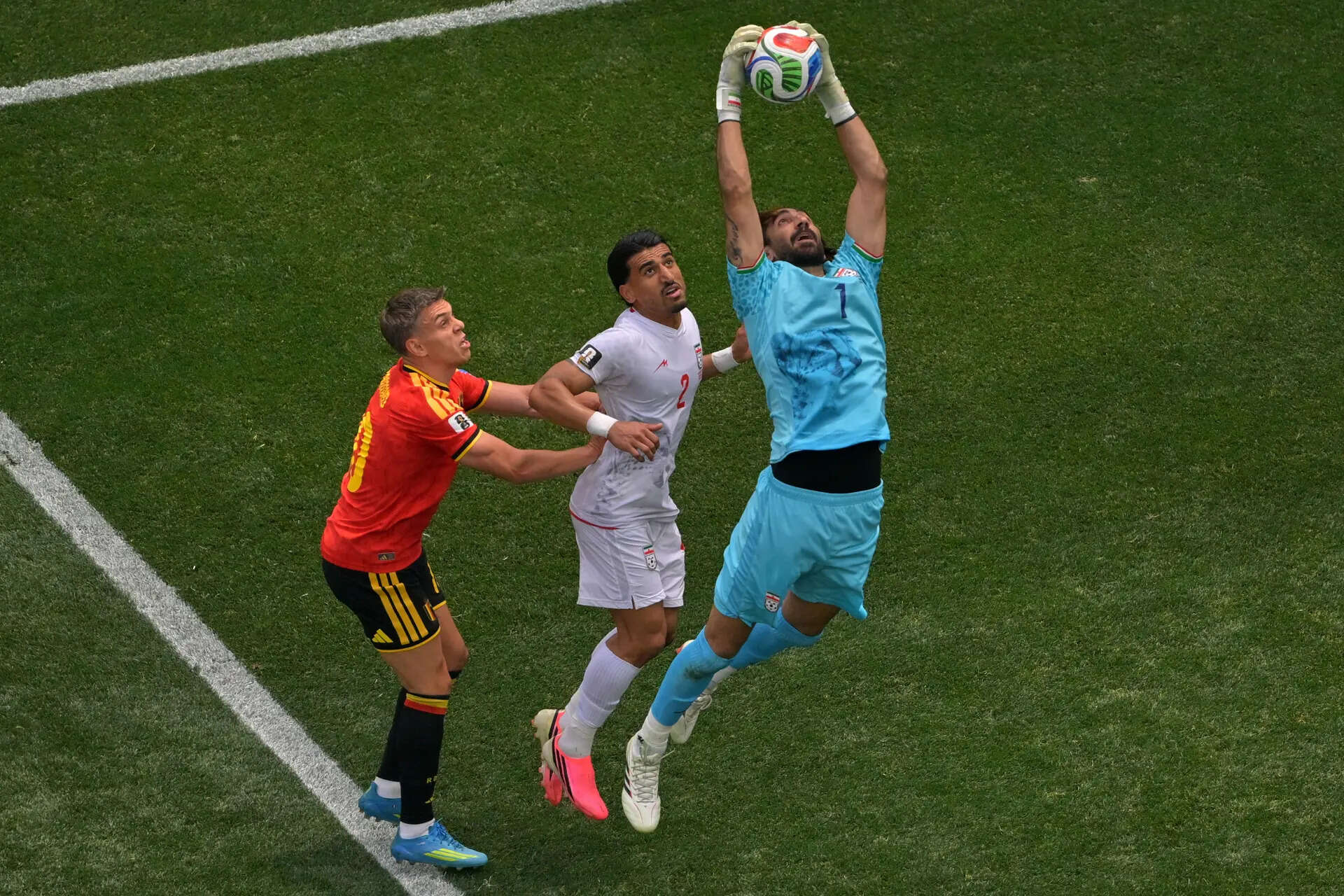
Iran goalkeeper Alireza Beiranvand (1) makes a save during the World Cup Group G football match between Belgium and Iran on Sunday, June 21, 2026, in Inglewood, California, near Los Angeles. (AP Photo/Jayne Kamin-Oncea)
Today, Beiranvand holds two Guinness World Records.The first time was in October 2016 against South Korea, when he shot the ball 61.002 meters (200.14 feet), setting a record for the longest throw in football history.He also holds the record for the longest lob in football history, with a kick measuring 78.014 meters (255.95 feet).Those achievements helped build his reputation internationally, but it was his more traditional goalkeeping qualities that decided the match against Belgium.
The tough realities of Iran’s World Cup
Beiranvand’s performance came under unusual circumstances for the Iranian national team. While many countries at the World Cup operate from dedicated training bases within the United States, Iran’s preparations are reportedly complicated by geopolitical tensions, visa restrictions and logistical challenges.The team is frequently called upon to play in Mexico and manages a rigorous travel schedule before playing within the United States.
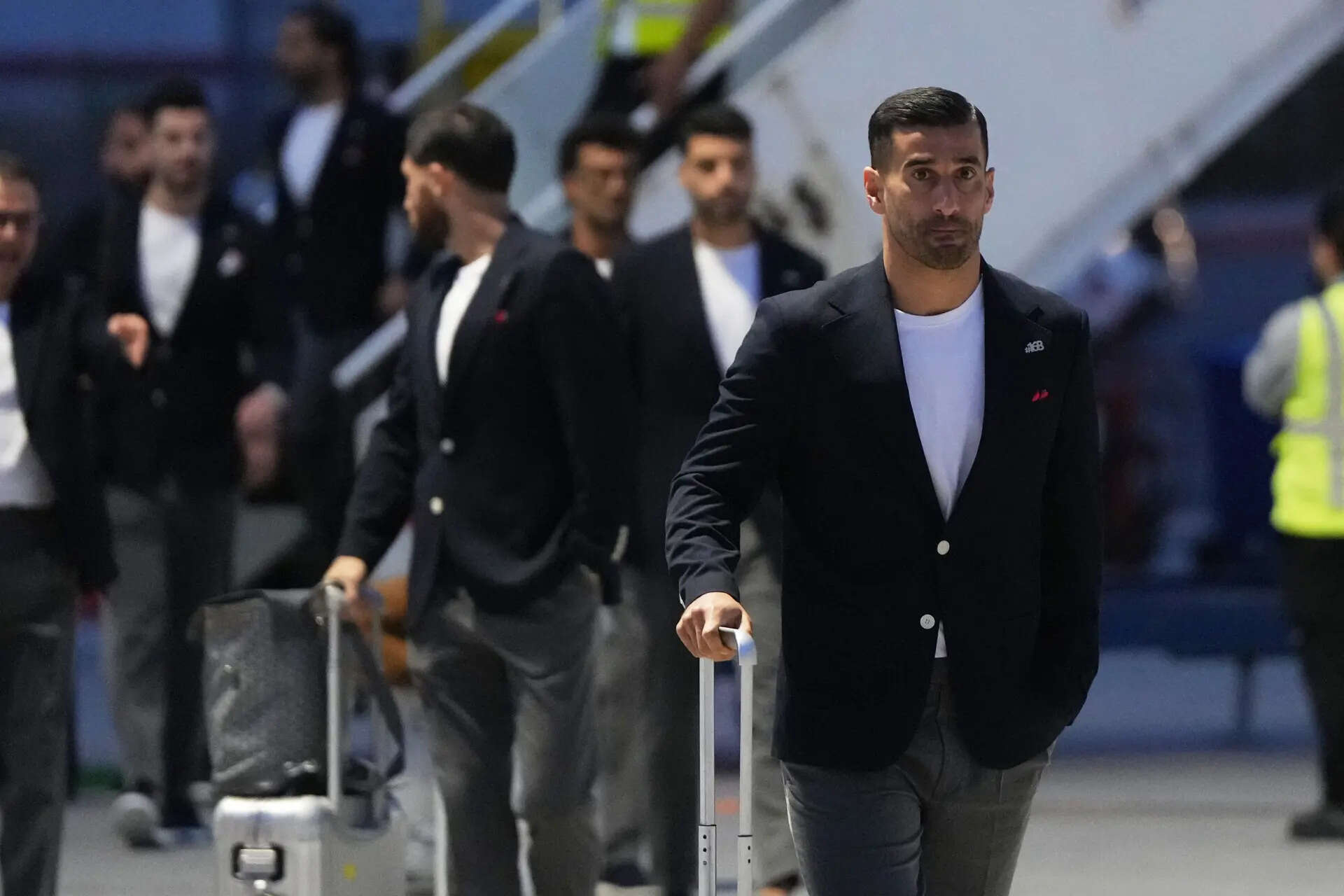
Iran’s Esan Hajisafi (right) arrives with teammates for the FIFA World Cup in Tijuana, Mexico, Sunday, June 7, 2026. (AP Photo/Gregory Bull)
In some cases, teams were not granted permission to enter the country until close to kick-off, causing additional physical and mental stress during games when preparation time was already limited.Players are also performing in a divisive and emotional home environment, which adds another layer of pressure to every game they play.Against Belgium, none of these complications became apparent once the game started.Iran remained disciplined defensively, surviving long periods without the ball and benefiting from a goalkeeper who seemed determined to let nothing get past him.
The decisive moment of the World Cup
Beiranvand was disappointed after Iran’s opening 2-2 draw with New Zealand, a game in which he conceded twice and watched his teammates attack to salvage a point.Against Belgium, the roles were reversed.This time, it was the goalkeeper who led the team through the difficult moments and ensured that the favored opponents left Los Angeles without a goal.Statistics illustrate the scale of the challenge.The Belgian team ended up taking 22 shots, 7 of which were on target, with a ball possession rate of nearly 70%. Iran completed less than a third of its passes and spent much of the afternoon defending its own penalty area.However, when the final whistle sounded, the score was still 0-0.For Beiranvand, it represents another chapter in a life story that rarely follows conventional lines. From sleeping outside Tehran’s football stadium, to standing between the World Cup goalposts, to frustrating one of Europe’s strongest teams, his journey has become one of the most compelling stories of the World Cup.The seven saves against Belgium may ultimately be remembered as the performance that kept Iran alive at the World Cup, but they were also another reminder that some of football’s most compelling stories begin away from the spotlight.