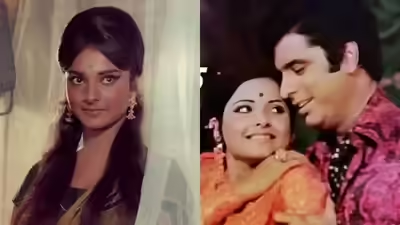








Priti Zeta has sought an injunction from the Bombay High Court to restrain the circulation of AI-generated deepfake videos, morphed images and other unauthorized digital content depicting her. The case has been filed as “Preity Zinta v. Google LLC & Ors”.When the matter came up on July 3, Justice Madhav Jamdar said he would issue an order on July 6 after directing both parties to work out a practical mechanism to remove the allegedly infringing content from the online platform.In her lawsuit, Zinta named several intermediaries as defendants, including Google and Meta, as well as domain registrars and certain identified infringers. She claims that AI-generated deepfake videos, manipulated images and chatbot-style interactions depicting her are being hosted on various online platforms. Senior advocate Venkatesh Dhond, appearing in court at Zinta, said deepfakes generated by artificial intelligence are becoming increasingly sophisticated. He urged the court to grant urgent ex parte relief and direct the identified websites and intermediaries to immediately remove all infringing materials mentioned in the complaint.Dhond further asked John Doe to issue an order against the unknown infringers and sought a broader injunction restricting everyone from publishing or distributing unauthorized artificial intelligence-generated content featuring Zinta.Lawyers representing Google and Meta told the court that they had no objection to removing URLs containing distorted or obscene material as pointed out by the plaintiffs. However, they object to any blanket directive requiring intermediaries to proactively monitor or remove content that may not be infringing. They also argued that some of the URLs flagged in the lawsuit did not contain objectionable material.Domain registrars say their role is limited to registering domain names and they have no control over URLs that direct users to content hosted on social media platforms.Justice Jamdar noted that any relief granted by the court must be carefully designed to ensure that the objectionable content is removed without affecting legitimate online material. While expressing the view that the case requires protective relief, the judge directed the parties to collaborate on a workable agreement that would facilitate the removal of truly infringing content while protecting legitimate content. The matter is scheduled to be heard again on July 6.