







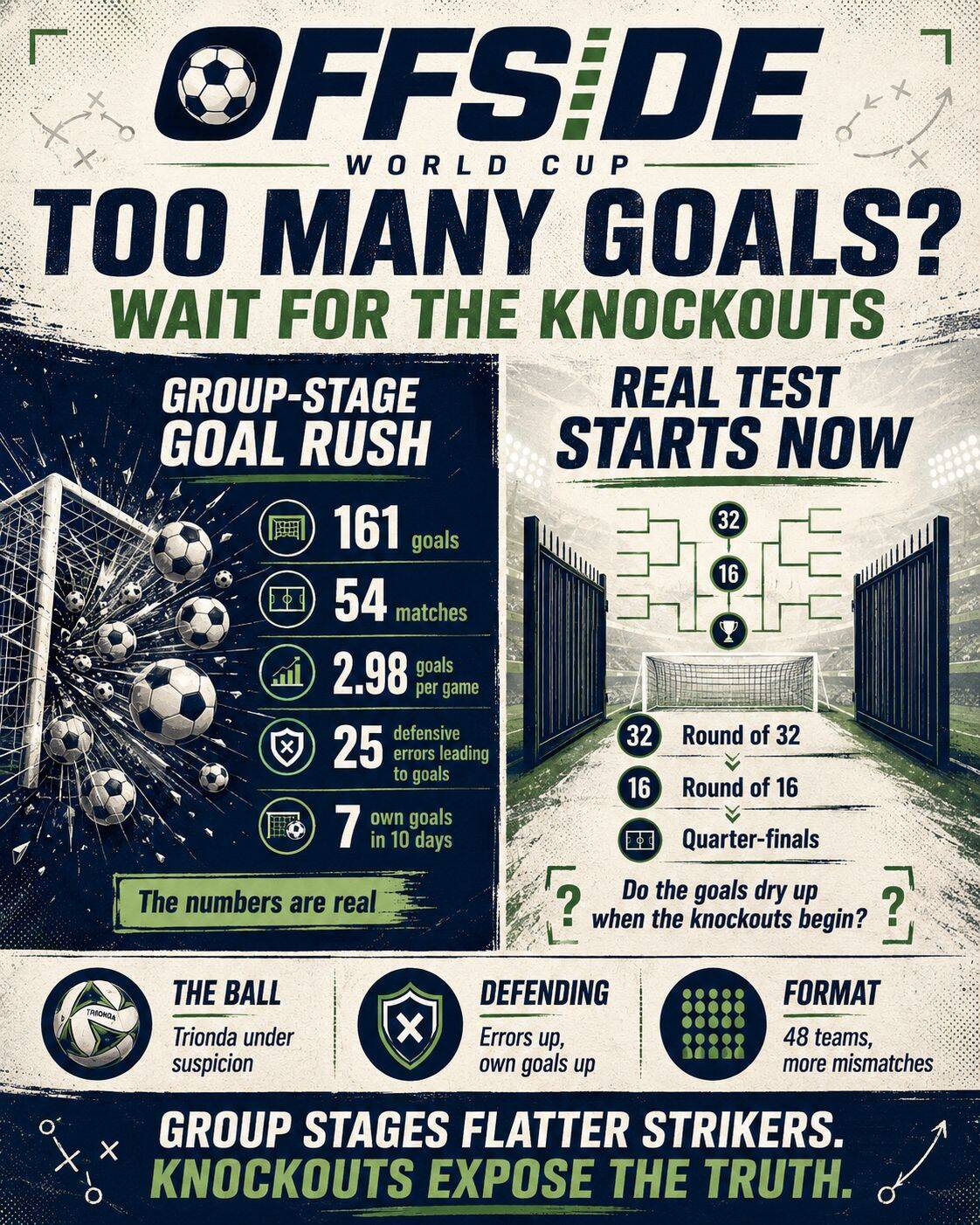
In the dark days of the coronavirus pandemic, Ted Russo is a rare ray of hope. As the world went into lockdown, an American football coach had the enviable job of not only coaching a team in a sport he knew little about, but also boosting the world’s morale during its darkest days. Against all odds, Ted Russo did it and ultimately made America fall in love with a sport closely associated with suburban moms and minivans.Until then, it was widely believed that football didn’t score as high and move fast enough as baseball, basketball, hockey and American football to capture the attention of Americans. Perhaps that’s one reason why this World Cup, in which North America is a co-host, has been one of the most free-scoring tournaments in recent years.Football fans try to provide various reasons for this. Some blame it on moisture loss. Others noted that the ball was ostensibly harder to catch and had a mind of its own in mid-air. There have been accusations that the 48-team World Cup has led to a one-sided competition, as we have never seen a country beaten 7-1. Sunday League purists claim strict refereeing will prevent defenders from kicking attackers out of the way.But at least these numbers aren’t made up. After 54 games, 161 goals have been scored in this period. That’s 2.98 per game. In the 2022 Qatar World Cup, 172 goals were scored in 64 games, with an average of 2.69 goals per game. Russia’s 2018 score was 2.64. In 2010, the South African team averaged 2.27 points per game.
Is this just a group stage prank or is there something else going on? Because the group stage is a lie. They are often as flattering and exaggerated as life insurance agents.
golden boot race
The race for the Golden Boot looks equally ridiculous. Messi already has five goals. At many World Cups, that number would get you a medal. Vinicius Junior, Kylian Mbappe and Erling Haaland were stuck with four men each and were unexpectedly classified due to hunger. Lionel Messi Five ahead. Vinicius Junior, Kylian Mbappe and Erling Haaland round out the four. Deniz Undav, Johan Manzambi, Matheus Cunha, Ismael Saibari and Jonathan David are thirteen. Cristiano Ronaldo and Harry Kane are lurking among them, along with many others.
there is a ball
The ball has also become part of the story, with the adidas Trionda being unfairly compared to 2010’s Jabulani, which was the most hated ball since the meteor wiped out the dinosaurs. Former England goalkeeper Joe Hart cast doubt on the goal, pointing out that even elite players can be blinded by the ball and make awkward moves. Trionda’s four-panel construction and deep seams allow the ball to have a mind of its own, making it harder for goalies.
Defense, where are you?
However, it’s not always just the ball. Fans say defense has become a lost art in the game. Too many referees have eliminated the brawlers, the tough tacklers, the ones who stick their heads where the angels fear to tread. Opta’s defensive error data shows that 25 errors directly led to goals, compared with a total of 37 defensive errors between the 2018 and 2022 World Cups.Part of that was down to technique, part down to poor touches, loose clearances and the goalkeeper panicking when Erling Haaland pressed them. Of course, we also have the fairy tales of goalkeepers from smaller countries like Cape Verde or Curaçao, or how Carlos Queiroz’s Ghana stifled England’s attack.Own goals tell a similar story: Reuters reports that there have been seven own goals in the first 10 days of this tournament, threatening the record of 12 set in 2018. Add in five substitutions, a tired backline, tougher defense in the VAR era and a wider quality gap in a 48-team World Cup, and the scoring surge makes sense.
Waiting for the knockout stages?
But this points to a different kind of problem. As we move toward the business end, the tournament becomes stingier. Taking the 2014 Brazilian team as an example, the average points per game in the group stage was 2.83 and the average points per game in the knockout rounds was 2.19. In 2016, the German team’s scoring rate in the group stage was 2.44, and its goal rate in the knockout rounds was 1.88. The average was 2.71 per game in 2002, falling to 1.94 in the knockout rounds. Of course, there are exceptions. The 2022 World Cup in Qatar and the 2018 World Cup in Russia both have a high number of goals.The real defensive crunch usually occurs as the game progresses into the quarterfinals and beyond. That’s when teams stop chasing goal difference, stop playing their final group games, and start viewing every mistake as a career-ending clerical error. Perhaps that’s why Germany’s 7-1 victory over Brazil is still fresh in people’s minds to this day.Time will tell whether the goal-scoring spree continues into the knockout stages, when defenses will be better equipped, forwards and attackers tougher, and we will find out whether the group stage is just a beautiful anomaly.
Third place duel
Now comes the most undignified waiting room of the tournament. With only eight of the 12 third-placed teams advancing, four points should be close to boarding, leaving Bosnia and Herzegovina virtually safe. The three-goal games – Sweden, Croatia, South Korea, Algeria, Paraguay and Scotland – are where the real blood pressure is, as goal difference is now as important as goals. Cape Verde and Belgium are both still breathing but need help. The Democratic Republic of the Congo, Ecuador and Senegal are in a danger zone where another result elsewhere could turn hopes into baggage.
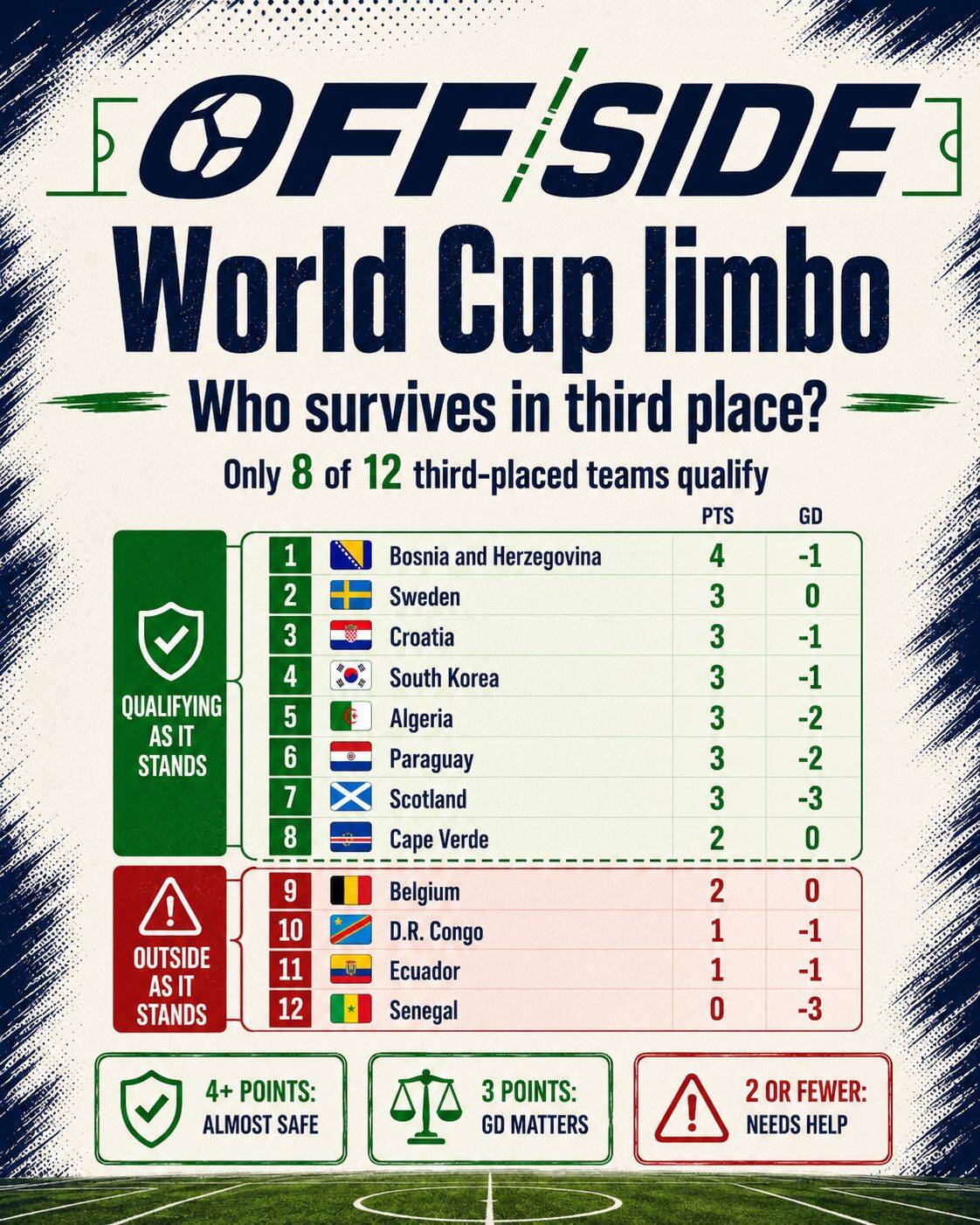
This is the hidden price of all these goals. Every 90th-minute consolation, every own goal, every goalkeeper save is now on the table like evidence in a court of law. The knockout rounds have begun, with only some teams watching from hotel rooms. The top eight third-placed teams advance, with points priority followed by goal difference, goals scored, fair play and FIFA rankings as deciders.meme watchWinner: