







Messi may be leading the race for the Golden Boot and continuing to rewrite World Cup history, but the Argentina captain was not the highest-rated attacking player after the group stage.instead, FIFA official performance rankings During the 2026 FIFA World Cup, Germany substitute Deniz Undav made three substitute appearances and narrowly surpassed Messi at the top of the attacking charts.FIFA’s official World Cup Player Strength Rankings, developed in conjunction with Saudi Aramco under the guidance of Arsene Wenger, use advanced match data to evaluate each player’s performance. Outfield players are scored out of 10 for attack, creativity and defense, while goalkeepers are assessed separately for their goalkeeping and ball-keeping contributions.While many expected Messi, Kylian Mbappe and even Harry Kane to top the list after the group stage, FIFA’s numbers rewarded efficiency, with Uddhav’s notable influence off the bench proving enough to claim first place.
Deniz Undav tops FIFA attacking rankings despite never starting a competitive match
Few players can impact a game so much in such a short amount of playing time.Uddhav has yet to start for Germany at this World Cup, making just three appearances as a substitute for a total of 86 minutes.
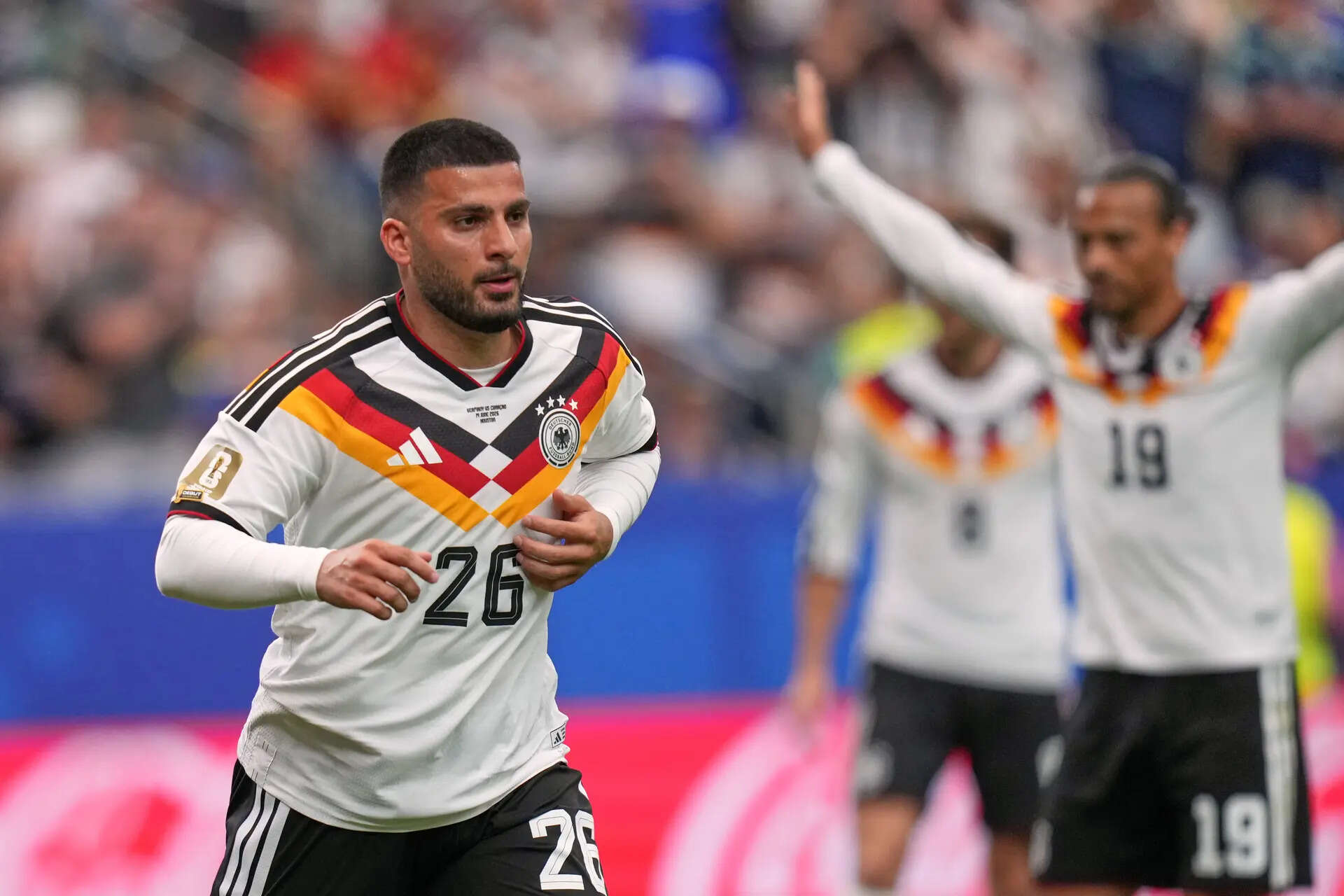
Germany’s Deniz Undav reacts after scoring a goal during the World Cup Group E soccer match between Germany and Curacao on Sunday, June 14, 2026, in Houston. (AP Photo/Eric Gay)
Yet these brief cameos yielded extraordinary numbers.The forward has scored 3 goals and provided 2 assists, averaging a goal every 28.7 minutes and a direct goal contribution every 17.2 minutes.His outstanding performance came in Germany’s 7-1 victory over Curacao, where he came off the bench to score a goal and provide two assists in just 26 minutes.He then scored a dramatic brace as a substitute against Ivory Coast, including the decisive 94th-minute winner that helped Germany win 2-1.These performances helped Uddhav’s offensive rating reach 8.36, slightly higher than Messi’s 8.34, making him the highest-rated offensive player after the FIFA group stage, although he has never played in the starting lineup.
Messi continues to rewrite World Cup history
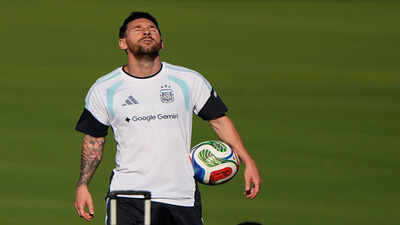
Even though Messi ranks second in FIFA’s attacking rankings, he still produced one of the best campaigns of his career.The Argentina captain has scored six goals in three group games to take his World Cup tally to 19 and cement his status as the tournament’s top scorer heading into the knockout rounds.When Argentina defeated Jordan, Messi also became the first player in history to score against 13 different countries in the World Cup.According to Opta, he also became the first footballer to score in seven consecutive World Cup games, furthering an already unrivaled tournament record.His attacking efficiency of 8.34 firmly topped the FIFA rankings, but Uddhav’s astonishing efficiency eventually pushed him to second place.
Mbappe, Vinicius and Dembélé continue to catch up
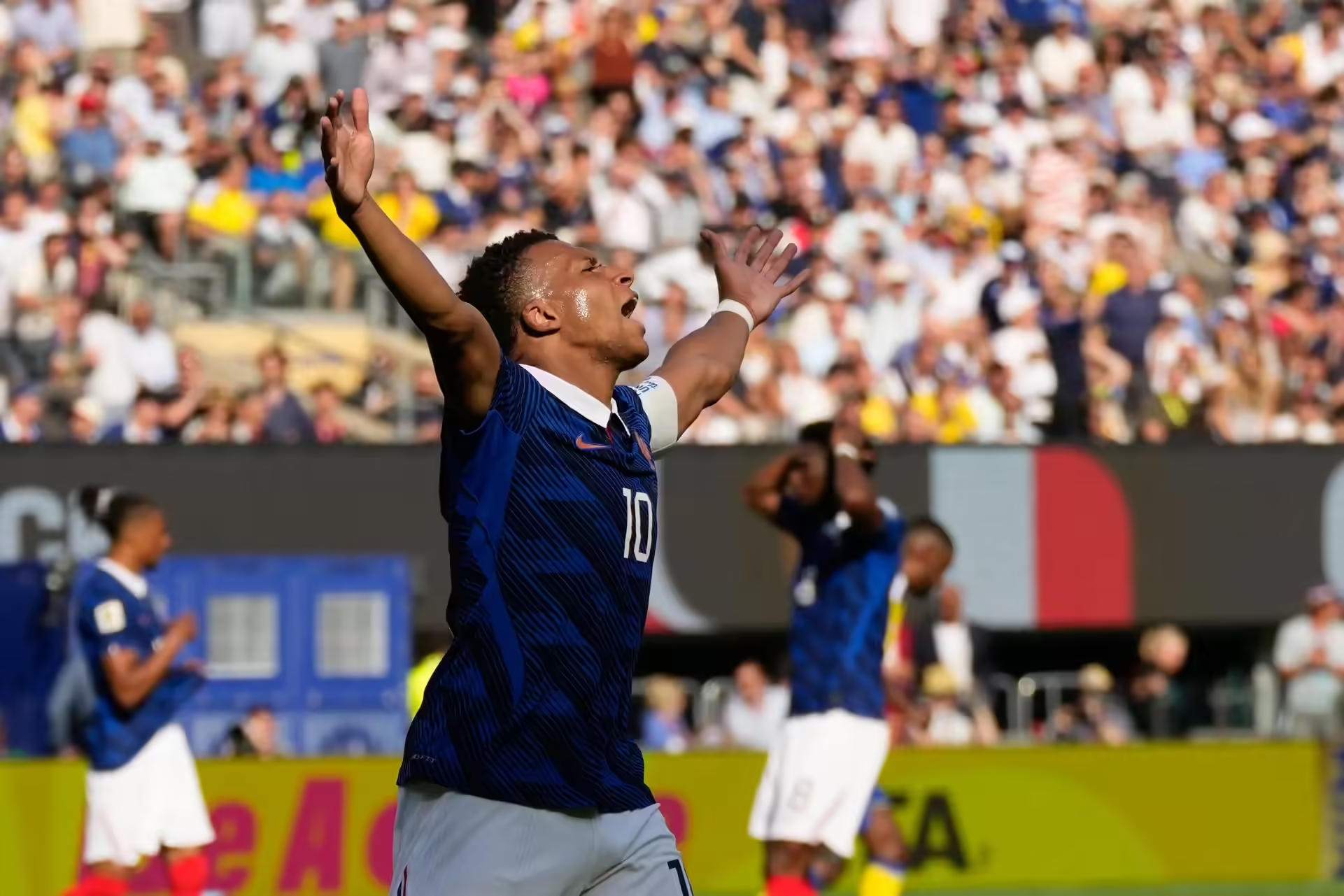
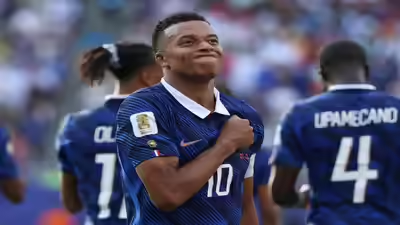
France captain Kylian Mbappe ranks third in FIFA’s offensive rankings with 8.13 points, while Brazil’s Vinicius Junior performed well in the group stage and ranks fourth with 7.92 points.Vinicius scored four goals in the first round and scored in all three games against Morocco, Haiti and Scotland, becoming the first Brazilian player in 24 years to score in every game in the World Cup group stage.France winger Ousmane Dembélé moved up to sixth after producing one of the decisive performances of this World Cup against Norway. He completed a first-half hat-trick in just 32 minutes, making him the first player to complete a World Cup hat-trick in the first half since Oleg Salenko in 1994, and the second-fastest player ever to complete the World Cup treble from kick-off.Norwegian striker Erling Haaland was also among the top performers, scoring four goals on his World Cup debut.
FIFA rankings measure more than just goals scored
Unlike the Golden Boot rankings, FIFA’s official rankings evaluate complete performances rather than simple goals scored.The attacking category rewards quality of chances, finishing and attacking involvement, while creativity measures passing, chance creation and progression. Defensive contributions are also included to give a broader picture of a player’s overall impact.Among FIFA’s other position indicators, France’s Michael Aulis ranked first in creativity with 8.03 points, Canada’s Luc de Fugueroles ranked as the defender with the highest creativity with 7.38 points, while Paraguay goalkeeper Orlando Gill and South Africa’s Rowan Williams occupied the top two goalkeepers.As the round of 32 begins, the battle for individual honors in the tournament remains unresolved.Messi still leads the Golden Boot contenders with six goals, while Kylian Mbappe, Ousmane Dembélé, Vinicius Junior and Erling Haaland have all scored four. France, Argentina and Mexico are also the only teams to have a perfect record of winning all three of their group games, ensuring that many of the tournament favorites remain firmly in contention.Whether Uddhav can retain his No. 1 spot in the FIFA statistical rankings without becoming a regular starter now becomes one of the more intriguing subplots in the knockout rounds.
The 10 best outfield players after the FIFA World Cup 2026 group stage
- 1. Deniz Undav (Germany) – Offense: 8.36 | Creativity: 6.78 | Defense: 4.70
- 2. Lionel Messi (Argentina) – Attack: 8.34 | Creativity: 6.43 | Defense: 5.14
- 3. Kylian Mbappe (France) – Attack: 8.13 | Creativity: 7.25 | Defense: 4.59
- 4. Vinícius Júnior (Brazil) – Offense: 7.92 | Creativity: 6.39 | Defense: 4.75
- 5. John Manzenby (Switzerland) – Offense: 7.57 | Creativity: 6.60 | Defense: 4.83
- 6. Ousmane Dembélé (France) – Attack: 7.53 | Creativity: 6.65 | Defense: 4.74
- 7. Erling Haaland (Norway) – Attack: 7.33 | Creativity: 5.02 | Defense: 4.61
- 8. Crysencio Summerville (Netherlands) – Offense: 7.09 | Creativity: 6.73 | Defense: 5.42
- 9. Elijah Just (New Zealand) – Offense: 7.09 | Creativity: 6.28 | Defense: 5.42
- 10. Ismail Sebari (Morocco) – Offense: 7.08 | Creativity: 6.14 | Defense: 5.30