








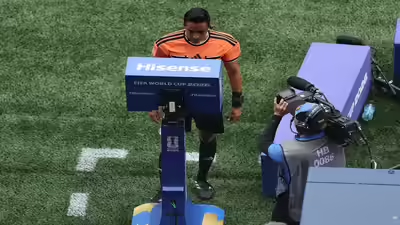
FIFA has made major changes to video assistant referee (VAR) operations for the remainder of the 2026 FIFA World Cup after referees came under increasing criticism in the knockout stages, moving VAR officials into stadiums for every remaining match.The new agreement, which comes into effect from Thursday’s quarter-final match between France and Morocco, marks a significant change in how the tournament review system operates. Until now, every VAR decision has been handled remotely from the FIFA video operations room at the International Broadcast Center (IBC) in Dallas, Texas.The governing body insists the change is intended to enhance operational reliability rather than alter the decision-making process, but it comes after a series of high-profile controversies that have put refereeing standards under scrutiny.
How FIFA’s new VAR system will work
Under the revised agreement, FIFA will place one primary VAR official and one reserve VAR official in each stadium for the remaining matches.Previously, all reviews were conducted at the International Broadcast Center in Dallas, with officials monitoring each game remotely. While the Dallas Center remains the primary location for VAR operations, the newly deployed on-site officers will act as additional safeguards should any communication or technical issues arise between the stadium and the central operations center.In France’s quarter-final match against Morocco, Uruguayan official Riordan Gonzalez was named the main VAR, while Nicaragua’s Tatiana Guzman served as the backup VAR at Boston Stadium.
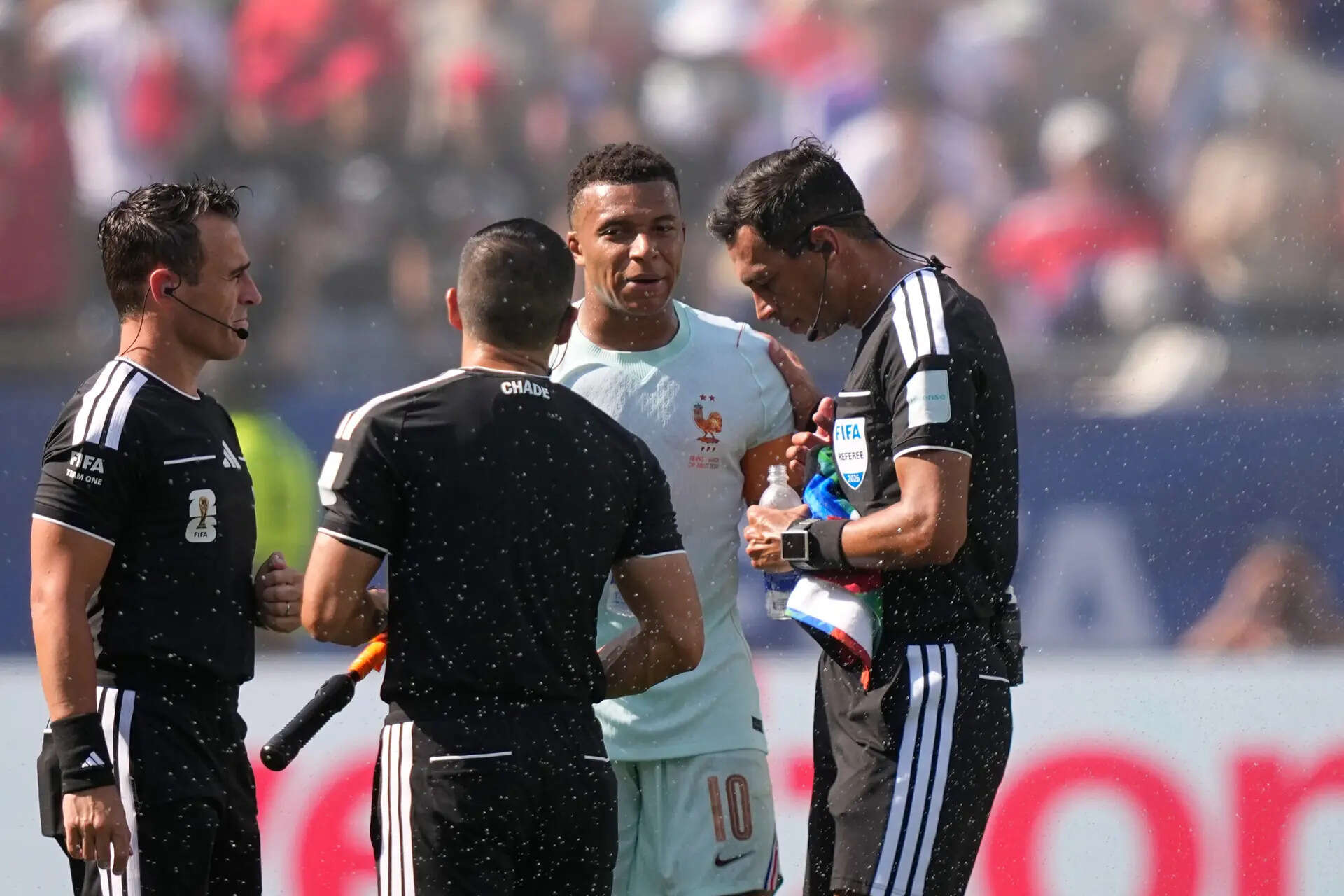
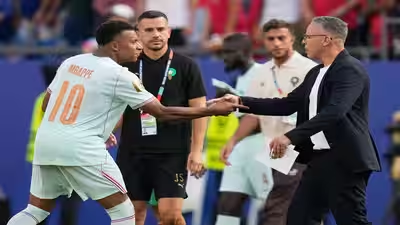
Kylian Mbappe of France during a World Cup quarterfinal soccer match in Foxborough, Massachusetts, Thursday, July 9, 2026 Mbappe) talks with referee Facundo Tello (right) and assistant referees Juan Pablo Berati (left) and Gabriel Child (all three from Argentina). (AP Photo/Matt Slocum)
If communications to the Dallas Center are lost, officials inside the stadium will be able to continue reviewing the incident, allowing referees to conduct sideline reviews without interrupting play.FIFA regulations already stipulate that the game cannot be suspended due to VAR technical failure. Therefore, the purpose of the additional on-field officials is to minimize the risk of technical issues affecting the game during decisive stages of the game.Thursday’s match also features an experienced all-Argentine on-field refereeing team, led by referee Facundo Tello, assistant referees Juan Pablo Berati and Gabriel Child, with Dario Herrera serving as fourth official and Cristian Navarro as substitute assistant referee.
After the controversial round of 16, criticism comes with changes
The operational changes come after several knockout matches sparked widespread debate over refereeing decisions.Argentina’s dramatic 3-2 comeback against Egypt was particularly controversial. Egypt coach Hossam Hassan launched an extraordinary post-match attack on French referee François Letexier, accusing him of favoring the reigning world champions.“The referee is unfair, God is enough for me and is the best handler. He wasted the efforts of the entire country. The trophy is for Argentina,” Hassan told reporters.“This was clearly a rigged game and the whole world saw it.”Egypt forward Mustafa Zico echoed these complaints after the defeat.“The referee is not good, he is unfair. His injustice is obvious. He persecuted us from the beginning of the game. He did not want us to win.”
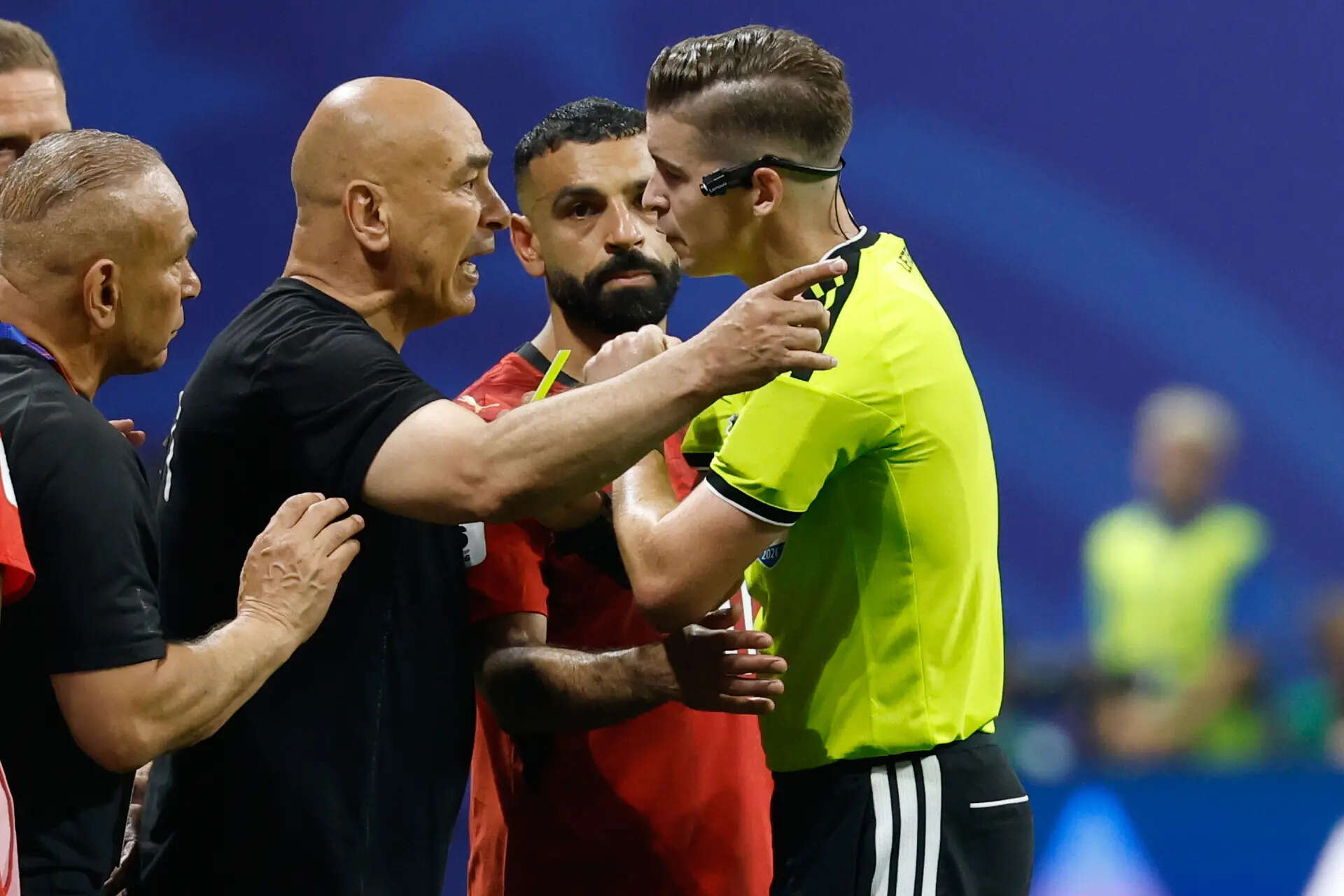
Egypt coach Hossam Hassan gets into an argument with French referee François Letsier during the World Cup round of 16 match between Argentina and Egypt on Tuesday, July 7, 2026 in Atlanta. (AP Photo/Erik S. Lesser)
England manager Thomas Tuchel also criticized the standard of refereeing after England’s last-16 win over Mexico, during which defender Jarrell Guasah was sent off.“It’s not good enough,” Tuchel said.“Hey [the referee] Any team can be sent out at any time. It’s just not good enough. It’s just inconsistent and unreliable in games. ““Now we have two fourth officials who will scream at you if you take one foot out of the dugout. That’s not good enough.”The series of controversial decisions sparked debate among supporters, with some making baseless accusations on social media that some matches were rigged.
FIFA toughens refereeing system, Collina defends officials
Despite the criticism, FIFA remains firmly behind its referees.Chief referee Pieluigi Collina has publicly defended the impartiality of World Cup officials while acknowledging that refereeing decisions are always part of the wider discussion within football.“Of course, constructive discussion about decisions will always be part of football, but baseless accusations have no place in our sport,” Collina said.“No one can question the integrity of FIFA World Cup match officials. When this happens, it can trigger a reaction that results in threats to them and their families. This is not right.”“Similarly, no one can claim that FIFA referees can be influenced by anyone, not even the president of FIFA.”FIFA has not directly linked the introduction of on-field VAR officials to any individual incident and insists the revised protocol is intended to provide greater operational security rather than changing refereeing procedures.With the World Cup now entering its final stages, football’s governing body hopes the enhanced VAR structure will focus attention on the game itself as the race for the trophy continues through to the quarter-finals, semi-finals and final.